-
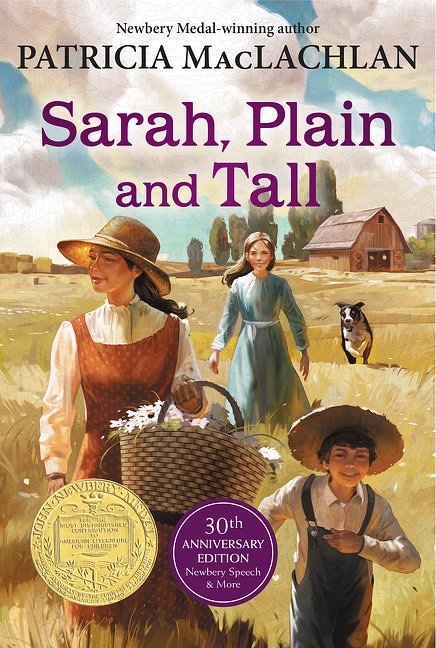 This Newbery Medal-winning book and children's literature classic is perfect for fans of Laura Ingalls Wilder's Little House on the Prairie books, historical fiction, and timeless stories using rich and beautiful language. _Sarah, Plain and Tall_ gently explores themes of abandonment, loss, and love. The 30th Anniversary edition includes author Patricia MacLachlan's Newbery speech, a discussion guide, and a reading list. Set in the late nineteenth century and told from young Anna's point of view, _Sarah, Plain and Tall_ tells the story of how Sarah Elisabeth Wheaton comes from Maine to the prairie to answer Papa's advertisement for a wife and mother. Before Sarah arrives, Anna and her younger brother, Caleb, wait and wonder. Will Sarah be nice? Will she sing? Will she stay? Correlates to the Common Core State Standards in English Language Arts
 -
The Global Achievement Gap: Why Even Our Best Schools Don't Teach the New Survival Skills Our Children Need--And What We Can Do About It
Tony Wagner
Despite the best efforts of educators, our nations schools are dangerously obsolete. Instead of teaching students to be critical thinkers and problem-solvers, we are asking them to memorize facts for multiple choice tests. This problem isnt limited to low-income school districts: even our top schools arent teaching or testing the skills that matter most in the global knowledge economy. Our teens leave school equipped to work only in the kinds of jobs that are fast disappearing from the American economy. Meanwhile, young adults in India and China are competing with our students for the most sought-after careers around the world. Education expert Tony Wagner has conducted scores of interviews with business leaders and observed hundreds of classes in some of the nations most highly regarded public schools. He discovered a profound disconnect between what potential employers are looking for in young people today (critical thinking skills, creativity, and effective communication) and what our schools are providing (passive learning environments and uninspired lesson plans that focus on test preparation and reward memorization).He explains how every American can work to overhaul our education system, and he shows us examples of dramatically different schools that teach all students new skills. In addition, through interviews with college graduates and people who work with them, Wagner discovers how teachers, parents, and employers can motivate the net generation to excellence. An education manifesto for the twenty-first century, The Global Achievement Gap is provocative and inspiring. It is essential reading for parents, educators, business leaders, policy-makers, and anyone interested in seeing our young people succeed as employees and citizens. -
 One of the most important philosophy titles published in the twentieth century, Josef Pieper's Leisure, the Basis of Culture is more significant, even more crucial, today than it was when it first appeared fifty years ago.<p>Pieper shows that the Greeks understood and valued leisure, as did the medieval Europeans. He points out that religion can be born only in leisure -- a leisure that allows time for the contemplation of the nature of God. Leisure has been, and always will be, the first foundation of any culture.</p><p>He maintains that our bourgeois world of total labor has vanquished leisure, and issues a startling warning: Unless we regain the art of silence and insight, the ability for nonactivity, unless we substitute true leisure for our hectic amusements, we will destroy our culture -- and ourselves.</p><p>These astonishing essays contradict all our pragmatic and puritanical conceptions about labor and leisure; Josef Pieper demolishes the twentieth-century cult of "work" as he predicts its destructive consequences.</p>
 -
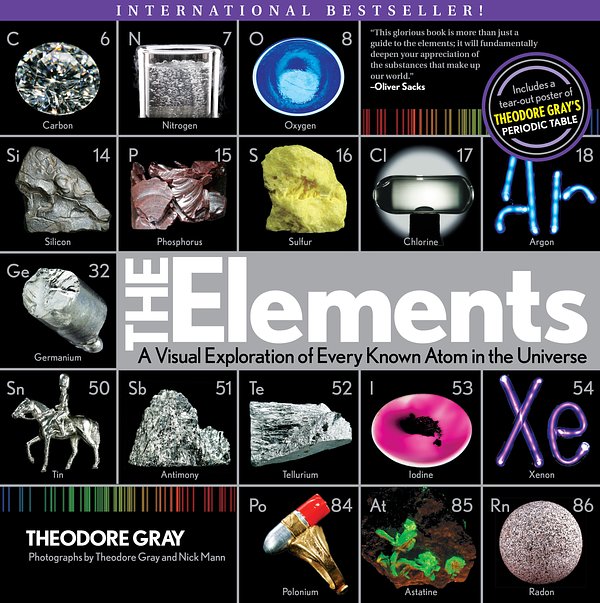
The Elements: A Visual Exploration of Every Known Atom in the Universe
A Visual Exploration of Every Known Atom in the Universe
Theodore Gray
The elements are what we, and everything around us, are made of. But how many elements has anyone actually seen in pure, uncombined form? The Elements provides this rare opportunity. Based on seven years of research and photography, the pictures in this book make up the most complete, and visually arresting, representation available to the naked eye of every atom in the universe. Organised in order of appearance on the periodic table, each element is represented by a spread that includes a stunning, full-page, full-colour photograph that most closely represents it in its purest form. For example, at -183 degrees C, oxygen turns from a colorless gas to a beautiful pale blue liquid. Also included are fascinating facts, figures, and stories of the elements as well as data on the properties of each, including atomic weight, density, melting and boiling point, valence, electronegativity, and the year and location in which it was discovered. Several additional photographs show each element in slightly altered forms or as used in various practical ways. The element's position on the periodic table is pinpointed on a mini rendering of the table and an illustrated scale of the element's boiling and/or melting points appears on each page along with a density scale that runs along the bottom. Packed with interesting information, this combination of solid science and stunning artistic photographs is the perfect gift book for every sentient creature in the universe. -
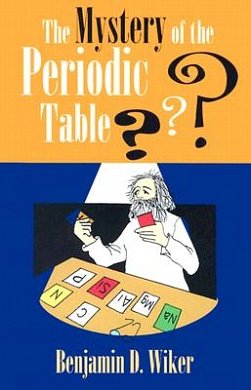 Author Benjamin Wiker leads the reader on a delightful and absorbing journey through the ages, on the trail of the elements of the Periodic Table as we know them today. He introduces the young reader to people like Von Helmont, Boyle, Stahl, Priestly, Cavendish, Lavoisier, and many others, all incredibly diverse in personality and approach, who have laid the groundwork for a search that is still unfolding to this day. The first part of Wiker's witty and solidly instructive presentation is most suitable to middle school age, while the later chapters are designed for ages 12-13 and up, with a final chapter somewhat more advanced.
 -
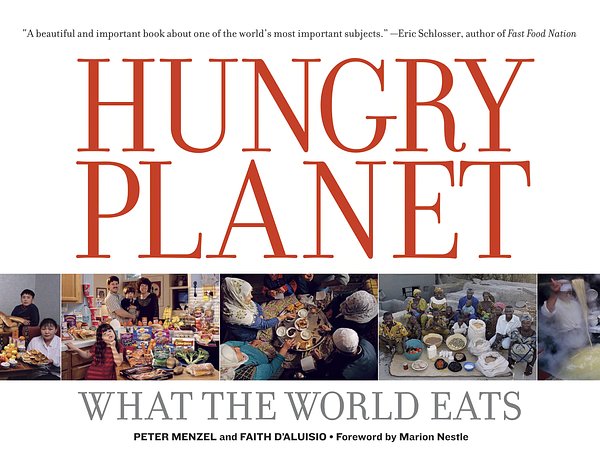 The age-old practice of sitting down to a family meal is undergoing unprecedented change as rising world affluence and trade, along with the spread of global food conglomerates, transform eating habits worldwide. HUNGRY PLANET profiles 30 families from around the world--including Bosnia, Chad, Egypt, Greenland, Japan, the United States, and France--and offers detailed descriptions of weekly food purchases; photographs of the families at home, at market, and in their communities; and a portrait of each family surrounded by a week's worth of groceries. Featuring photo-essays on international street food, meat markets, fast food, and cookery, this captivating chronicle offers a riveting look at what the world really eats. The paperback edition of the 2006 James Beard Book of the Year featuring a photojournalistic survey of 30 families from 24 countries and the food they eat during the course of one week. Winner of the 2006 James Beard Award for writings on food, finalist for the 2006 IACP Cookbook Award for food reference/technical, and winner of the 2005 Harry Chapin Media Award. Includes more than 300 photographs plus essays on the politics of food by Marion Nestle, Michael Pollan, Charles C. Mann, Alfred W. Crosby, Francine R. Kaufman, Corby Kummer, and Carl Safina. The hardcover edition has sold 40,000 copies.Awards 2006 James Beard Cookbook of the YearThe Splendid Table Book of the Year 2005 Harry Chapin Media Award finalist for the 2006 IACP Cookbook Award Reviews"The photos are at once charming and astonishing in their honesty."--Milwaukee Journal Sentinel"A treasure trove of information . . . The photographs alone are worth the price of admission."--Travel Girl"Arresting, beautiful, enlightening and infinitely human, this is a collection of full-page photos of families around the world surrounded by what they eat in a single week -- from Bhutan to San Antonio. Read the illuminating statistics and the essays. This is a book for the family and for the classroom. You won't see the same old "aren't we better than them" attitude, nor will you be shamed. This book reminds us that what we eat is the simplest, yet most profound, thread that ties us together."--Lynne Rossetto Kasper, Host of American Public Media's Public Radio Program, The Splendid Table."the politics of food at its most poignant and provocative. A coffee table book that will certainly make coffee interesting." -Washington Post"While the photos are extraordinary--fine enough for a stand-alone volume--it's the questions these photos ask that make this volume so gripping. This is a beautiful, quietly provocative volume." -Publishers Weekly, starred review"This book of portraits reveals a planet of joyful individuality, dispiriting sameness, and heart-breaking disparity. It''s a perfect gift for the budding anti-globalists on your list" -Bon Appetit"[A] unique photographic study of global nutrition" -USA Today"Grabs your attention for the startlingly varied stories it tells about how people feed themselves around the world. Its contents are based on detailed research, beautifully photographed, presented with often disturbing clarity." -Associated Press"The world's kitchens open to Peter Menzel and Faith D'Aluisio, the intrepid couple who created the series of books called Material World.... As always with this couple's terse, lively travelogues, politics and the world economy are never far from view." -New York Times Book Review "illuminating, thought-provoking, and gloriously colorful" -Saveur magazine"Richly colored and quietly composed photographs....Hungry Planet is not a book about obesity or corporate villains; it's something much grander. Its premise is simple to the point of obvious and powerful to the point of art." -Salon.com"A fascinating nutritional and gustatory tour." -San Jose Mercury News"A grand culinary voyage through our modern world...a lushly illustrated anthropological study." -San Francisco Bay Guardian"The talked-about book of the season...the stories are fascinating." -Detroit Free Press"Unique and engaging" -Delta Airlines Sky magazine

ISBNs in this list
9780736976152, 9781529347746, 9781845503192, 9781433580000, 9781433506956, 9781580896672, 9781474936262, 9781493041404, 9781845503185, 9780310711483, 9780310719908, 9780310748649, 9780310736561, 9780310771197, 9781432111694, 9781884550768, 9781884550706, 9781884550324, 9781582462462, 9783849185909, 9780825441721, 9780825441745, 9780825441738, 9780825441714, 9780825447709, 9780825443930, asnB001CKXVOE, 9780716601739, 9780716601906, 9783384111111, 9780062399526, 0884360436545, 9781579128951, 9781883937713, 9780984074426, asnB01N03HJ0M, asnB01K0TGB6M