-
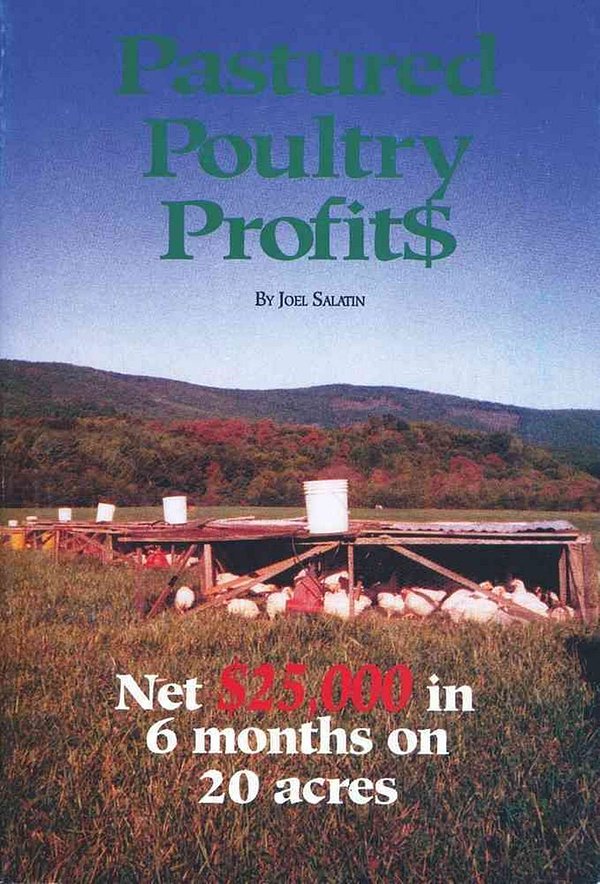 Farmer/author Joel Salatin is an ardent believer that a small-scale farmer does not have to subsist at the poverty level. On the cover of Pastured Poultry Profits is the promise that one can "Net $25,000 in 6 months on 20 acres." That ain't chicken feed.
 -
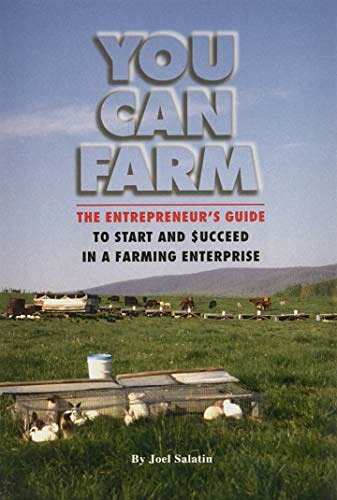
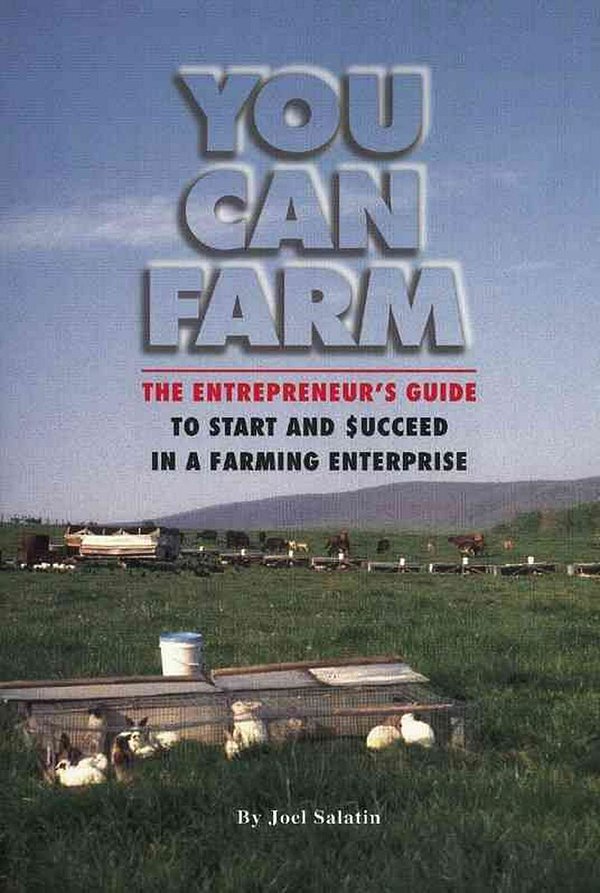 This is the book is for anyone who has ever dreamed of being a farmer. Practical and optimistic, You Can Farm gives prospective farmers a clear, step-by-step approach to turn their vision of a farm into a marketable reality. Illuminating both the pitfalls and the promise of farming, Salatin shows how you can make a living, and even a profit, by working the land. This readable guide is packed with advice that takes into account the whole farm, from getting along with neighbors to deep bedding livestock.
 -
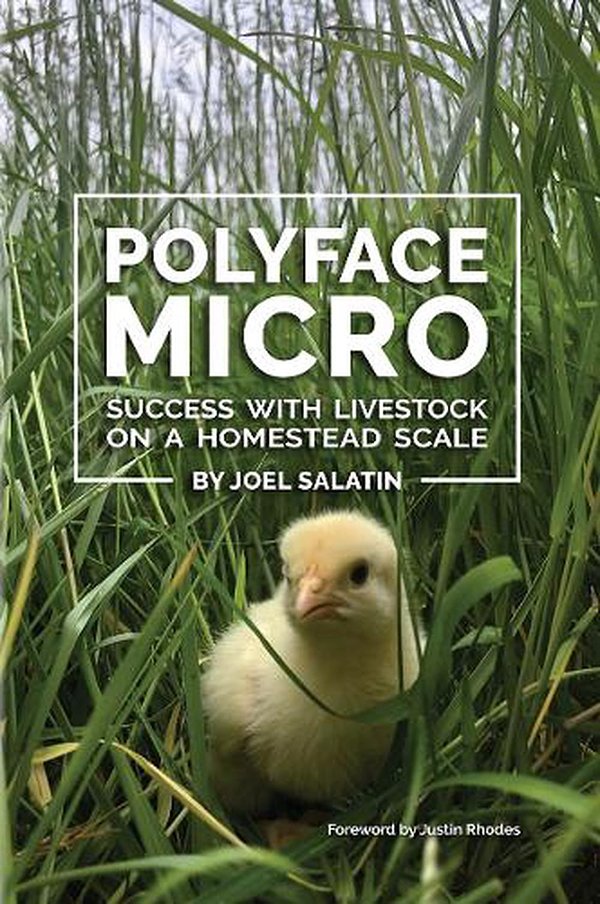
Polyface Micro: Success with Livestock on a Homestead Scale
Success with Livestock on a Homestead Scale
Joel Salatin
"I love your ideas, but I only have a few acres. How do I do this at my scale?" Success with domestic livestock does not require large land bases. Joel Salatin and his family's Polyface Farm in Virginia lead the world in animal-friendly and ecologically authentic, commercial, pasture-based livestock production. In Polyface Micro he adapts the ideas and protocols to small holdings (including apartments)! Homesteaders can increase production, enjoy healthy animals, and create aesthetically and aromatically pleasant livestock systems. Whether you're a new or seasoned homesteader, you'll find tips and inspiration as Joel coaches you toward success and abundance. -
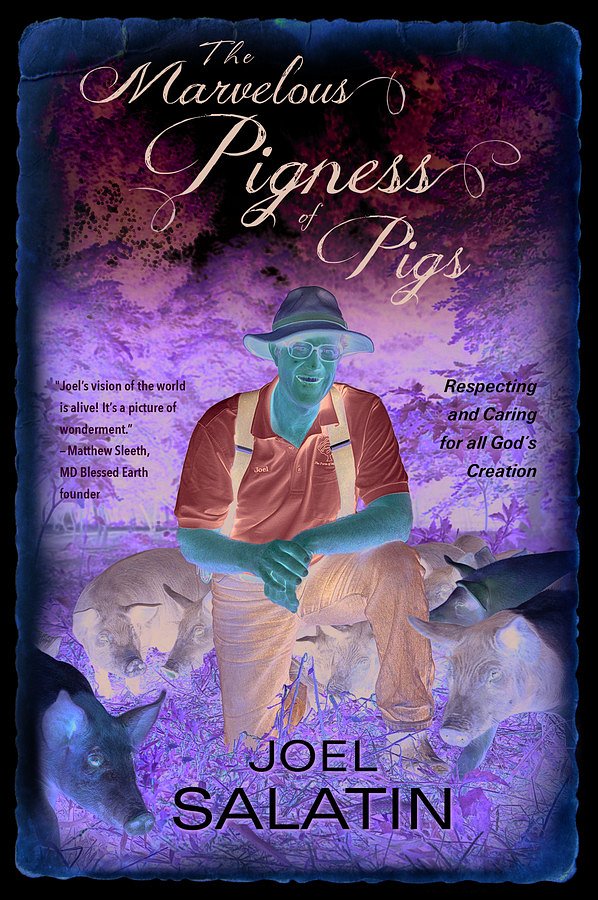 From Christian libertarian farmer Joel Salatin, a clarion call to readers to honor the animals and the land, and produce food based on spiritual principles. What on earth is THE MARVELOUS PIGNESS OF PIGS? It's an inspiring call to action for people of faith . . . a heartfelt plea to heed the Bible's guidance . . . . It's an important and thought-provoking explanation of how by simply appreciating the marvelous pigness of pigs, we are celebrating the Glory of God. As a man of deep faith and student of the Bible, and as a respected and successful ecological family farmer, Joel Salatin knows that God created heaven and earth and meant for all living organisms to be true to their nature and their endowed holy purpose. He intended for us to respect and care for His gift of creation, not to ravage and mistreat it for our own pleasure or wealth. The example that inspires the book's title explains what Salatin means: when huge corporate farms confine pigs in cramped and dark pens, inject them with antibiotics and feed them herbicide-saturated food simply to increase profits, they are not respecting them as a creation of God or allowing them to express even their most rudimentary uniqueness - that special role that is part of His design. Every living organism has a God-given uniqueness to its life that must be honored and respected, and too often that is not happening today. Salatin shows us the long overlooked ethics and instructions in the Bible for how to eat, how to shop, how to think about how we farm and feed the world. Through scripture and Biblical stories, he shows us why it's more vital than ever to look to the good book rather than corporate America when feeding the country and your family. Salatin makes a compelling case for Christian stewardship of the earth and how it relates to every action we take regarding our food. He also opens our eyes to a common misconception many Christians may have about environmentalism: it's not a bad thing, and definitely not just the province of secular liberals; it's really a very good thing, part of heeding God's Word. With warmth and with humor, but with no less piercing criticism of the industrial food complex, Salatin brings readers on a fascinating journey of farming, food and faith. Readers will not say grace over their plates the same way ever again.
 -
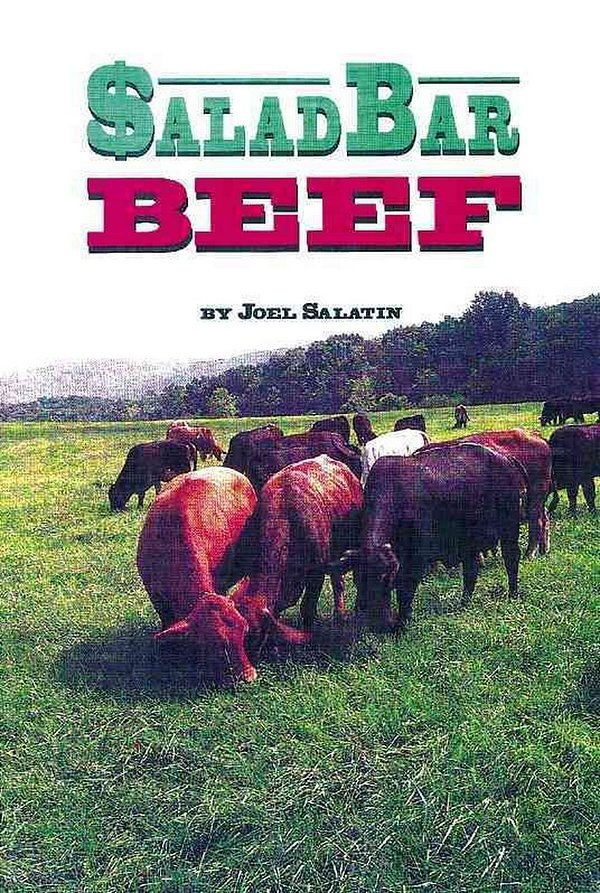 Salad Bar Beef is a "how-to" book that explains the why, how, and who of small-scale, organic livestock management. The Salatin family speaks from three generations of practical experience; at Polyface Farm they have created a successful prototype for profitable small-herd management that has withstood the tests of time, fluctuating demand for beef, and price variation.
 -
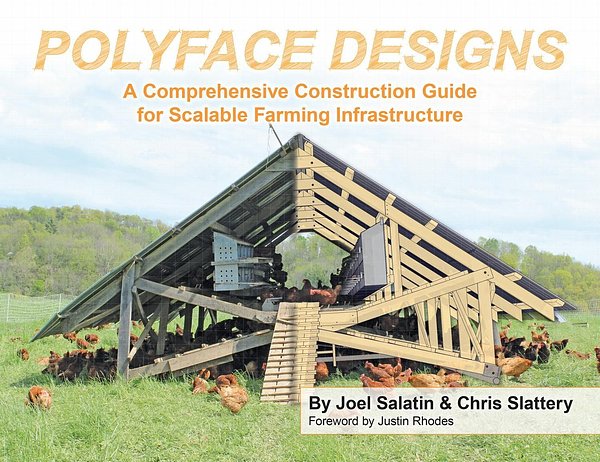
Polyface Designs: A Comprehensive Construction Guide for Scalable Farming Infrastruture
A Comprehensive Construction Guide for Scalable Farming Infrastructure
Joel Salatin, Chris Slattery
A comprehensive how-to manual of Polyface Farm's signature designs--with tips, tricks, and a half century of lessons learned through trial and error Have you wondered how to build the Polyface broiler shelter, or the dolly to move it, or an Eggmobile, Gobbledygo or Shademobile? For folks getting started, folks adding enterprises, or folks wanting a cheaper bootstrap way to build portable livestock infrastructure, Polyface Designs has all the diagrams and do-it-yourself building specifications. Joel Salatin wrote the text and Polyface former apprentice and engineer extraordinaire Chris Slattery did the drawings. Ultimately practical, the book includes how to build a corral, a home-made head gate and even how to select the right axle for your project. Square footage requirements for the deep bedding hay shed and area advice for pig pastures make this the definitive repository for a lifetime of Polyface experimentation. A massive volume, its 568 pages are in full color and beautiful enough to be a coffee table book even though you'll use it in your shop. Don't let the cover price scare you; one building tip can more than save the price of the book. -
 Twenty years ago Joel Salatin wrote You Can Farm, which has launched thousands of farm entrepreneurs around the world. With another 20 years of experience under his belt, bringing him to the half-century mark as a full-time farmer, he decided to build on that foundation with a sequel, a graduate level curriculum. Everyone who reads and enjoys that previous work will benefit from this additional information. In those 20 years, Polyface Farm progressed from a small family operation to a 20-person, 6,000-customer, 50-restaurant business, all without sales targets, government grants, or an off-farm nest egg. As a germination tray for new farmers ready to take over the 50 percent of America's agricultural equity that will become available over the next two decades, Polyface Farm in Virginia's Shenandoah Valley stands as a beacon of hope in a food and farming system floundering in dysfunction: toxicity, pathogenicity, nutrient deficiency, bankruptcy, geezers, and erosion. Speaking into that fear and confusion, Salatin offers a pathway to success, with production, profit, and pleasure thrown in for good measure.
 -
 Gabe Brown didn't set out to change the world when he first started working alongside his father-in-law on the family farm in North Dakota. But as a series of weather-related crop disasters put Brown and his wife, Shelly, in desperate financial straits, they started making bold changes to their farm. Brown--in an effort to simply survive--began experimenting with new practices he'd learned about from reading and talking with innovative researchers and ranchers. As he and his family struggled to keep the farm viable, they found themselves on an amazing journey into a new type of farming: regenerative agriculture. Brown dropped the use of most of the herbicides, insecticides, and synthetic fertilizers that are a standard part of conventional agriculture. He switched to no-till planting, started planting diverse cover crops mixes, and changed his grazing practices. In so doing Brown transformed a degraded farm ecosystem into one full of life--starting with the soil and working his way up, one plant and one animal at a time. In Dirt to Soil Gabe Brown tells the story of that amazing journey and offers a wealth of innovative solutions to our most pressing and complex contemporary agricultural challenge--restoring the soil. The Brown's Ranch model, developed over twenty years of experimentation and refinement, focuses on regenerating resources by continuously enhancing the living biology in the soil. Using regenerative agricultural principles, Brown's Ranch has grown several inches of new topsoil in only twenty years! The 5,000-acre ranch profitably produces a wide variety of cash crops and cover crops as well as grass-finished beef and lamb, pastured laying hens, broilers, and pastured pork, all marketed directly to consumers. The key is how we think, Brown says. In the industrial agricultural model, all thoughts are focused on killing things. But that mindset was also killing diversity, soil, and profit, Brown realized. Now he channels his creative thinking toward how he can get more life on the land--more plants, animals, and beneficial insects. "The greatest roadblock to solving a problem," Brown says, "is the human mind."
 -
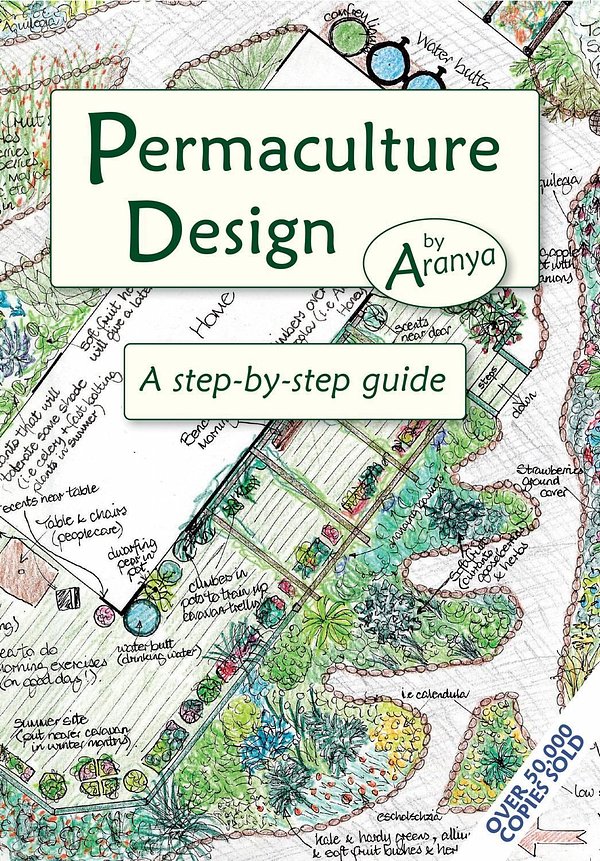 Are you excited about permaculture but unclear how to put it into practice for yourself? In this unique, full colour guide, experienced permaculture teacher Aranya leads you through the design process from beginning to end, using clear explanations, flowcharts and diagrams. It is based on course worksheets which have been designed, refined and tested on students over time. Linking theory to practice, he places the ethics, principles, philosophies, tools and techniques directly into the context of the process itself. While written for anyone with a basic grasp of permaculture, this book also has plenty to offer the more experienced designer. This guide covers: Systems and patterns ~ Working as part of a design team ~ Land and non-land based design ~ Design frameworks ~ Site surveying and map making ~ Interviewing clients ~ Working with large client groups ~ Identifying functions ~ Choosing systems and elements ~ Placement and integration ~ Creating a design proposal ~ Project management ~ Presenting your ideas to clients ~ and much more. A great reference for anyone who has done, or is thinking of doing, any kind of permaculture course.
 -
 Sepp Holzer farms steep mountainsides in Austria 1,500 meters above sea level. His farm is an intricate network of terraces, raised beds, ponds, waterways and tracks, well covered with productive fruit trees and other vegetation, with the farmhouse neatly nestling amongst them. This is in dramatic contrast to his neighbors' spruce monocultures.In this book, Holzer shares the skill and knowledge acquired over his lifetime. He covers every aspect of his farming methods, not just how to create a holistic system on the farm itself, but how to make a living from it. Holzer writes about everything from the overall concepts, down to the practical details.In "Sepp Holzer's Permaculture" readers will learn: How he sets up a permaculture systemThe fruit varieties he has found best for permaculture growingHow to construct terraces, ponds, and waterwaysHow to build shelters for animals and how to work with them on the landHow to cultivate edible mushrooms in the garden and on the farmand much more Holzer offers a wealth of information for the gardener, smallholder or alternative farmer yet the book's greatest value is the attitudes it teaches. He reveals the thinking processes based on principles found in nature that create his productive systems. These can be applied anywhere.
 -
 Permaculture (permanent agriculture) is the conscious design and maintenance of agriculturally productive ecosystems which have the diversity, stability, and resilience of natural ecosystems. It is the harmonious integration of landscape and people providing their food, energy, shelter, and other material and non-material needs in a sustainable way. Without permanent agriculture there is no possibility of a stable social order. Permaculture design is a system of assembling conceptual, material, and strategic components in a pattern which functions to benefit life in all its forms. The philosophy behind permaculture is one of working with, rather than against, nature; of protracted and thoughtful observation rather than protracted and thoughtless action; of looking at systems in all their functions rather than asking only one yield of them; and of allowing systems to demonstrate their own evolutions.
 -
 David Holmgren builds on the extraordinary success of the permaculture concept and the global permaculture movement to provide a more cerebral and controversial contribution to the sustainability debate, including an exploration of how mainstream concepts of sustainability dodge the critical issue of global energy peak; and proposing ways to live within natures limits while providing a secure future for everyone. Permaculture: Principles and Pathways Beyond Sustainability brings into focus the powerful and still evolving permaculture concept he pioneered with Bill Mollison in the 1970s. It draws together and integrates 25 years of thinking and teaching to show a whole new way of understanding and action behind a simple set of design principles, taking a step-by-step look at the 12 Permaculture Concepts.This book provides refreshing perspectives on a range of environmental issues and shows how permaculture is much more than a system of gardening. For anyone seriously interested in understanding the foundations for sustainable design and culture, this book is essential reading.
 -
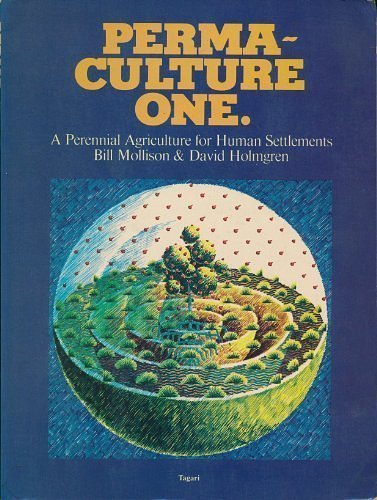 Permaculture One presents unique strategies for creating a food-producing system specifically suited to your needs, whether you garden in your backyard or engage in full-scale farming. By carefully designing a system around functional relationships between plant and animal species you can create a stable 'cultivated ecology' suited to local conditions. The book provides a catalog of 130 trees and plants useful to a permaculture system. The authors have based permaculture on the underlying philosophy 'of working with, rather than against nature' of protracted and thoughtful observation rather than protracted and thoughtless labor; and of looking at plants and animals in all their functions rather than treating any area as a single product system. Focusing throughout the book on providing for human needs while maintaining a deep respect for the finite resources of the earth. Mollison and Holmgren propose an alternative to the resource-hungry methods of commercial agriculture. 'Permaculture One' gives you the tools to begin at your own doorstep.
 -
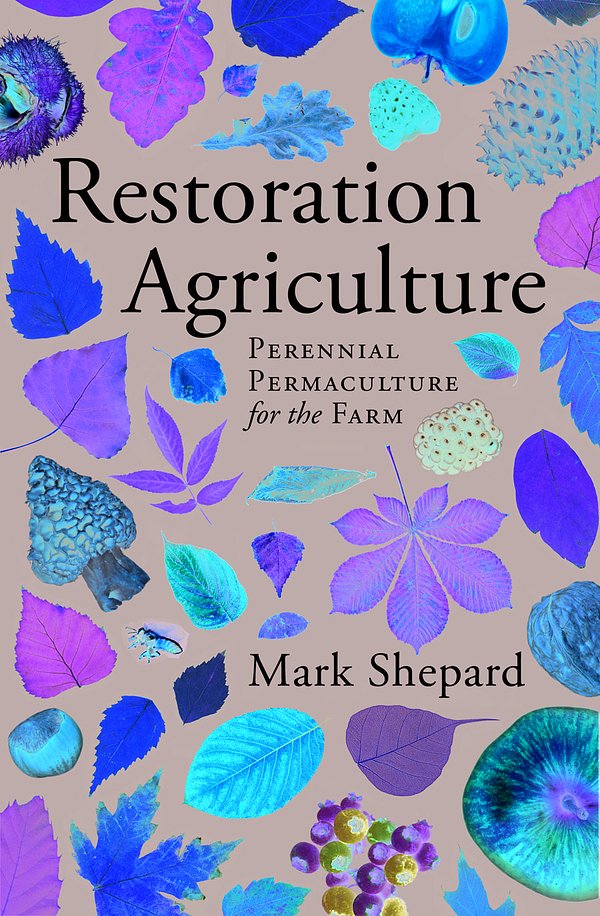 Around the globe most people get their calories from annual agriculture - plants that grow fast for one season, produce lots of seeds, then die. Every single human society that has relied on annual crops for staple foods has collapsed. Restoration Agriculture explains how we can have all of the benefits of natural, perennial ecosystems and create agricultural systems that imitate nature in form and function while still providing for our food, building, fuel and many other needs - in your own backyard, farm or ranch. This book, based on real-world practices, presents an alternative to the agriculture system of eradication and offers exciting hope for our future.
 -
 Is it too late to regenerate the earth? This groundbreaking book will change the way we think of, farm and grow food. Author and radical farmer Charles Massy explores transformative and regenerative agriculture and the vital connection between our soil and our health. It is a story of how a grassroots revolution - a true underground insurgency - can save the planet, help turn climate change around, and build healthy people and healthy communities, pivoting significantly on our relationship with
 -
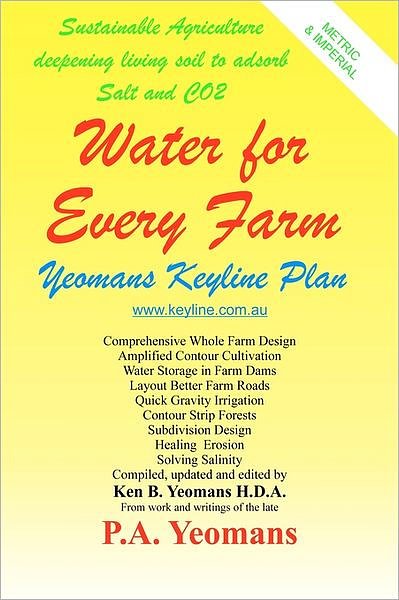 4th edition of this book since 1993. The first to be published outside Australia. Detailing the principles, techniques and systems for sustainable development of rural and urban landscapes.Keyline methods enable the rapid development of deep biologically fertile soil by converting subsoil into living topsoil.Keyline pattern cultivation enables the rapid flood irrigation of undulating land without terracing.Incidental results are the healing of soil erosion, bio-adsorption of salinity and the long term storage of atmospheric carbon in the soil as humus.The Keyline Scale of Permanence provides a priority guide to planning the various factors of broad scale development.This is a recommended text for Permaculture students. It includes updated selections and information; from P.A. Yeomans's books:- The Keyline Plan (1954); The Challenge of Landscape (1958); (Water for Every Farm (1964 and 2nd edition 1968) and The City Forest (1971). www.keyline.com.au

ISBNs in this list
9781733686624, 9781733686617, asnB01NANQQZU, asnB00HTJMUMQ