-
 Mathematical problems and visual illusions in the enigmatic work of M.C. Escher. A woman once rang me up and said, ’Mr. Escher, I am absolutely crazy about your work. In your print Reptiles you have given such a striking illustration of reincarnation.’ I replied, ‘Madame, if that’s the way you see it, so be it.’ An engagingly sly comment by the renowned Dutch graphic artist Maurits Cornelis Escher (1898–1972), the complex ambiguities of whose work leave hasty or single-minded interpretations far behind. Long before the first computer-generated 3-D images were thrilling the public, Escher was a master of the third dimension. His lithograph "Magic Mirror" dates as far back as 1946. In taking that title for this book, mathematician Bruno Ernst is stressing the magic spell Escher’s work invariably casts on those who see it. Ernst visited Escher every week for a year, systematically talking through his entire œuvre with him. Their discussions resulted in a friendship that gave Ernst intimate access to the life and conceptual world of Escher. Ernst’s account was meticulously scrutinized and made accurate by the artist himself. Escher’s work refuses to be pigeonholed. Scientific, psychological, or aesthetic criteria alone cannot do it justice. The questions remain. Why did he create the pictures? How did he construct them? What preliminary studies were necessary before he could arrive at the final version? And how are the various images Escher created interrelated? This book, complete with biographical data, 250 illustrations, and explications of mathematical problems, offers answers to these and many other questions, and is an authentic source text of the first order.
 -
 A collection of 14 short stories, some of which are based on radio plays. When the title story was first presented as a play on 2JJ it achieved cult status.
 -
 Marcus Aurelius Antoninus was the sixteenth emperor of Rome -- and by far the most powerful and wealthy man in the world. Yet he was also an intensely private person, with a rich interior life and deep reservoirs of personal insight. He collected his thoughts in notebooks, gems which have come to be called his Meditations. Never intended for publication, the work survived his death and has proved an inexhaustible source of wisdom and one of the most important Stoic texts of all time. In often passionate language, the entries range from essays to one-line aphorisms, and from profundity to bitterness. Marcus wrote to console himself in the face of the shortness of life, the shoddiness of the world, and the challenges of being human. He asks the very same questions that every thinking person must ask themselves today: Does the universe have a moral purpose, and what is my role in it? What exactly is it to be a good person, and how do I get there? Life is short: what does that mean for me? How can I get to know myself better? Anyone who is puzzled by such questions or searching for answers will profit from this timeless book, which is both an important historical document and a personal spiritual diary. This annotated edition will be the definitive translation of this classic and much-beloved text, with copious notes that will illuminate one of the greatest works of popular philosophy for new readers and enrich the understanding of even the most hardcore Stoic.
 -
 In a letter from 1845, the 14-year-old Emily Dickinson asked her friend Abiah Root if she had started collecting flowers and plants for a herbarium: "it would be such a treasure to you; 'most all the girls are making one." Emily's own album of more than 400 pressed flowers and plants, carefully preserved, has long been a treasure of Harvard's Houghton Library. This beautifully produced, slipcased volume now makes it available to all readers interested in the life and writings of Emily Dickinson. The care that Emily put into her herbarium, as Richard Sewall points out, goes far beyond what one might expect of a botany student her age: "Take Emily's herbarium far enough, and you have her." The close observation of nature was a lifelong passion, and Emily used her garden flowers as emblems in her poetry and her correspondence. Each page of the album is reproduced in full color at full size, accompanied by a transcription of Dickinson's handwritten labels. Introduced by a substantial literary and biographical essay, and including a complete botanical catalog and index, this volume will delight scholars, gardeners, and all readers of Emily Dickinson's poetry.
 -
Four Thousand Weeks: Time-Management for Mortals
The smash-hit Sunday Times bestseller that will change your life
Oliver Burkeman
Time is our biggest worry: there is too little of it. The acclaimed Guardian writer Oliver Burkeman offers a lively, entertaining philosophical guide to time and time management, setting aside superficial efficiency solutions in favor of reckoning with and finding joy in the finitude of human life. The average human lifespan is absurdly, insultingly brief. Assuming you live to be eighty, you have just over four thousand weeks. Nobody needs telling there isn't enough time. We're obsessed with our lengthening to-do lists, our overfilled inboxes, work-life balance, and the ceaseless battle against distraction; and we're deluged with advice on becoming more productive and efficient, and "life hacks" to optimize our days. But such techniques often end up making things worse. The sense of anxious hurry grows more intense, and still the most meaningful parts of life seem to lie just beyond the horizon. Still, we rarely make the connection between our daily struggles with time and the ultimate time management problem: the challenge of how best to use our four thousand weeks. Drawing on the insights of both ancient and contemporary philosophers, psychologists, and spiritual teachers, Oliver Burkeman delivers an entertaining, humorous, practical, and ultimately profound guide to time and time management. Rejecting the futile modern fixation on "getting everything done," Four Thousand Weeks introduces readers to tools for constructing a meaningful life by embracing finitude, showing how many of the unhelpful ways we've come to think about time aren't inescapable, unchanging truths, but choices we've made as individuals and as a society--and that we could do things differently. -
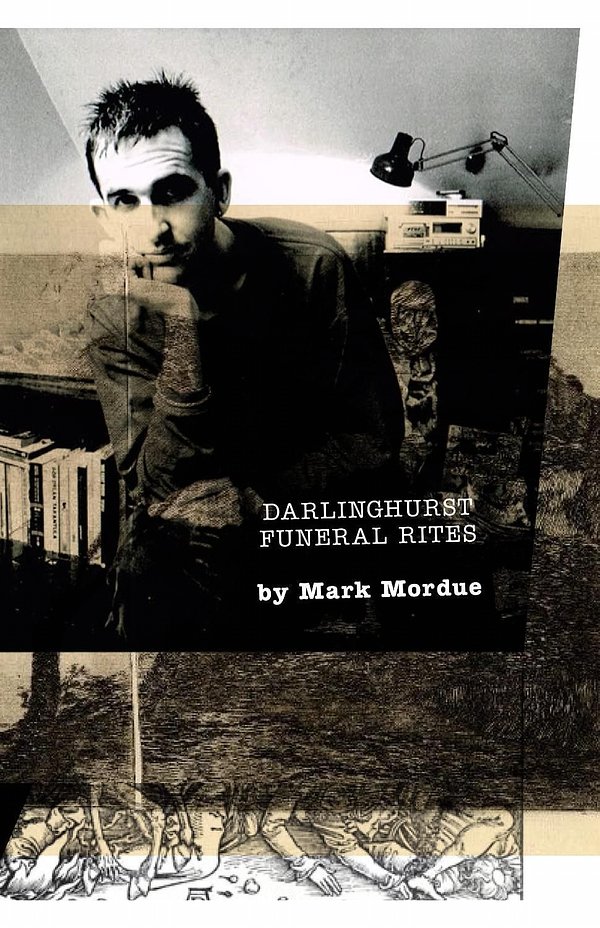 Darlinghurst Funeral Rites is a collection of poems by the writer and journalist Mark Mordue. It’s also a song cycle that takes the reader on a journey through Mark’s experiences in the Sydney post-punk music scene of the 1980s. It begins with his arrival in the big city, his immersion in the culture and the spirit of the times, his deep contact with bands, art and films as a leading rock journalist of the era, the corresponding hedonism and bohemianism that characterised iconic suburbs like Newtown, Surry Hills and Darlinghurst, and the disintegration of that world as a relationship ends and drugs, disillusion and displacement overtake people’s lives. The nature of the book is effectively a Dante-esque journey though Sydney in the post-punk 1980s. As such it is both a personal and a cultural history of the times: a creative history and internalised autobiography of a now mythical era.
 -
 Nick Cave has spent over three decades living on the artistic edge, building up a sizable following, but never compromising his vision. Mark Mordue's biography of Nick Cave leaves no stone unturned. It is written with the input of Cave and his close colleagues but retains an independent, critical spirit.
 -
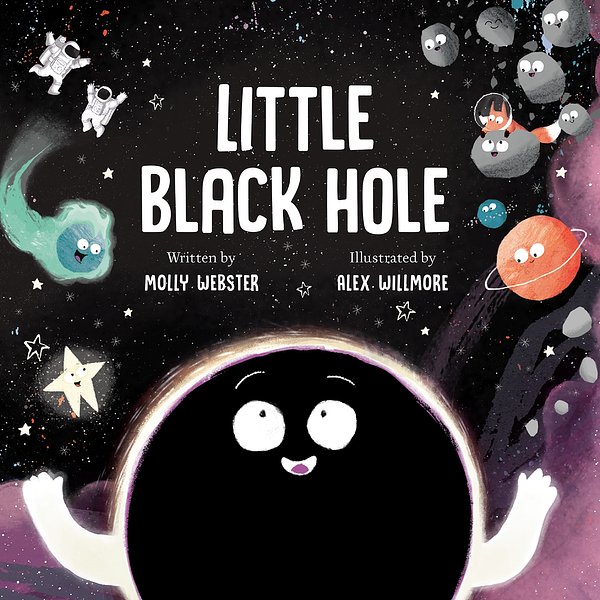 A charming and funny space-based story about the power of friendship and memory, perfect for fans of Oliver Jeffers, Tiny T. Rex and the Impossible Hug , and The Invisible String , from the senior correspondent at WNYC's Peabody Award-winning podcast and radio program Radiolab. There once was a little black hole who loved her universe, and especially her friends: the stars and the planets, the space rocks and the space fox, even the flying astronauts. She loved to play and laugh with them as they soared through the galaxy. That is, until they disappeared--which was always what happened. The little black hole felt all alone. But when she meets a big black hole and shares her worries, the big black hole knows just how to help! And the little black hole finds out that she has the power to find her friends, wherever she goes. With a quirky, playful story and sweet and silly art, this heartwarming story reminds us all that, no matter how lonely or anxious we might get, friendship is never more than a quick thought--and glow--away. And with back matter that gives readers information about the real science of black holes, this is a perfect book for all of the young space and science fans out there!
 -
 As a scholar of philosophy and propaganda and the child of refugees of WWII Europe, Jason Stanley has a deep understanding that democratic societies, including the United States, can be vulnerable to fascism. In How Fascism Works, he focuses on fascist politics-the language and beliefs that separate people into an "us" and a "them." Stanley knits together reflections on history, philosophy, sociology, and critical race theory with stories from contemporary Hungary, Poland, India, Myanmar, and the United States, among other nations, making clear the immense dangers of what he identifies as the ten pillars of fascist politics. By uncovering disturbing patterns that are as prevalent today as ever, Stanley reveals that the stuff of politics-rhetoric and myth-can become policy and reality all too quickly. Only by recognizing them, he argues, can we begin to resist their most harmful effects and return to democratic ideals. Book jacket.
 -
 Our democracy today is fraught with political campaigns, lobbyists, liberal media, and Fox News commentators, all using language to influence the way we think and reason about public issues. Even so, many of us believe that propaganda and manipulation aren't problems for us--not in the way they were for the totalitarian societies of the mid-twentieth century. In How Propaganda Works, Jason Stanley demonstrates that more attention needs to be paid. He examines how propaganda operates subtly, how it undermines democracy--particularly the ideals of democratic deliberation and equality--and how it has damaged democracies of the past. Focusing on the shortcomings of liberal democratic states, Stanley provides a historically grounded introduction to democratic political theory as a window into the misuse of democratic vocabulary for propaganda's selfish purposes. He lays out historical examples, such as the restructuring of the US public school system at the turn of the twentieth century, to explore how the language of democracy is sometimes used to mask an undemocratic reality.Drawing from a range of sources, including feminist theory, critical race theory, epistemology, formal semantics, educational theory, and social and cognitive psychology, he explains how the manipulative and hypocritical declaration of flawed beliefs and ideologies arises from and perpetuates inequalities in society, such as the racial injustices that commonly occur in the United States. How Propaganda Works shows that an understanding of propaganda and its mechanisms is essential for the preservation and protection of liberal democracies everywhere.
 -
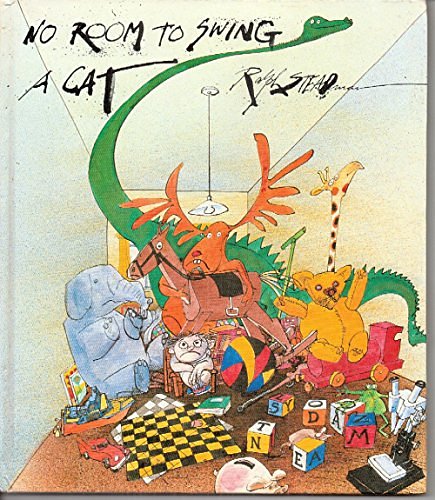 An illustrated book for young children which tells the story of Tom, whose room is so cluttered with toys that there is no room to swing a cat, or a moose, or even a dinosaur - until his mother comes up with a solution.
 -
 2014 National Book Award Finalist A New York Times Bestseller An audacious, darkly glittering novel set in the eerie days of civilization's collapse, "Station Eleven "tells the spellbinding story of a Hollywood star, his would-be savior, and a nomadic group of actors roaming the scattered outposts of the Great Lakes region, risking everything for art and humanity. One snowy night Arthur Leander, a famous actor, has a heart attack onstage during a production of "King Lear." Jeevan Chaudhary, a paparazzo-turned-EMT, is in the audience and leaps to his aid. A child actress named Kirsten Raymonde watches in horror as Jeevan performs CPR, pumping Arthur's chest as the curtain drops, but Arthur is dead. That same night, as Jeevan walks home from the theater, a terrible flu begins to spread. Hospitals are flooded and Jeevan and his brother barricade themselves inside an apartment, watching out the window as cars clog the highways, gunshots ring out, and life disintegrates around them. Fifteen years later, Kirsten is an actress with the Traveling Symphony. Together, this small troupe moves between the settlements of an altered world, performing Shakespeare and music for scattered communities of survivors. Written on their caravan, and tattooed on Kirsten's arm is a line from "Star Trek: " "Because survival is insufficient." But when they arrive in St. Deborah by the Water, they encounter a violent prophet who digs graves for anyone who dares to leave. Spanning decades, moving back and forth in time, and vividly depicting life before and after the pandemic, this suspenseful, elegiac novel is rife with beauty. As Arthur falls in and out of love, as Jeevan watches the newscasters say their final good-byes, and as Kirsten finds herself caught in the crosshairs of the prophet, we see the strange twists of fate that connect them all. A novel of art, memory, and ambition, "Station Eleven" tells a story about the relationships that sustain us, the ephemeral nature of fame, and the beauty of the world as we know it.
 -
 In March 2014, the Ebola outbreak in West Africa was first reported. By October 2014, it had become the largest and deadliest occurrence of the disease.Over 4,500 people have died. Almost 10,000 cases have been reported, across Liberia, Guinea, Sierra Leone, Nigeria and the United States.Impossible to ignore, The Hot Zone is the terrifying, true-life account of when this highly infectious virus spread from the rainforests of Africa to the suburbs of Washington, D.C in 1989. A secret SWAT team of soldiers and scientists were quickly tasked with halting the outbreak. And they did. But now, that very same virus is back. And we could be just one wrong move away from a pandemic.
 -
 "One of the most popular drawing guides ever published, The Art of Drawing has been an informative and thorough guide to several generations of aspiring artists. For fifty years, Willy Pogany has given the main principles of drawing in a simple, constructive way. By following the sequences laid out in the lessons, students quickly master the art of drawing." "As a further aid, Pogany gives a complete anatomical description of the body for each section, including a list of all bones and a description of the muscles and their uses. The Art of Drawing provides a complete drawing system and includes hundreds of illustrations."--BOOK JACKET.Title Summary field provided by Blackwell North America, Inc. All Rights Reserved
 -
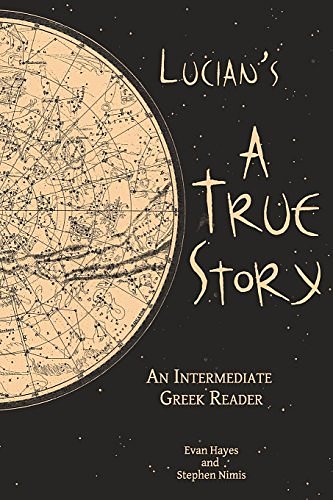 The aim of this book is to make Lucian's A True Story accessible to intermediate students of Ancient Greek. The running vocabulary and commentary are meant to provide everything necessary to read each page. Lucian's A True Story is a great text for intermediate readers. Its breathless narrative does not involve many complex sentences or constructions; there is some unusual vocabulary and a few departures from Attic Greek, but for the most part it is a straightforward narrative that is fun and interesting by one of antiquity's cleverest authors. In A True Story, Lucian parodies accounts of fanciful adventures and travel to incredible places by authors such as Ctesias and Iambulus. The story's combination of mockery and learning makes it an excellent example of the Greek literature of the imperial period. Revised August, 2014.
 -

Mira Calligraphiae Monumenta
From the Library of Emperor Rudolf II, a Complete Facsimile of Europe's Last Great Illuminated Manuscript
L et al Hendrix
-
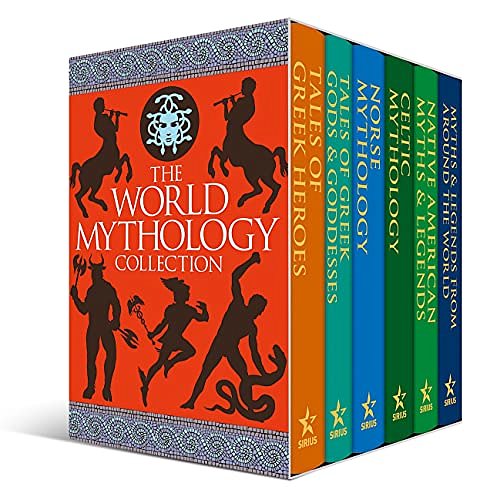
The World Mythology Collection: Deluxe 6-Volume Box Set Edition: 13
Deluxe 6-Book Hardcover Boxed Set (Arcturus Collector's Classics)
Nathaniel Hawthorne, Charles Squire, Mary Litchfield
-
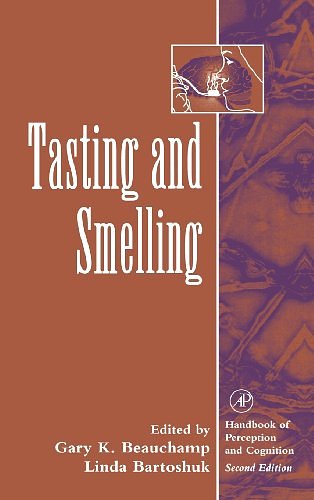
Tasting and Smelling (Handbook of Perception and Cognition, Second Edition)
Linda Bartoshuk, Carterette
Tasting and Smelling presents a comprehensive overview to research on these two important modes of perception. The book offers a review of research findings on the biophysics, neurophysiology, and psychophysicsof both senses, as well as discussing the emotional component associated with taste and smell, and clinical disorders affecting each of these two senses. Tasting and Smelling answers how odors and flavors are perceived, why we have favorites, and what happens when our senses go awry. This book is of interest to the researcher in perception, cognition, or neurophysiology.

ISBNs in this list
9783822837030, 9780207171666, 9781541673854, 9781847924018, 9780995409835, 9780593464755, 9780525511854, 9780385353304, 9780822602576, 9780500236499, 9780131846616, 9781398817234, 9781334520563, 9781429237864, 9781495413483, 9780070176034, 9781586424367, 9784861522475